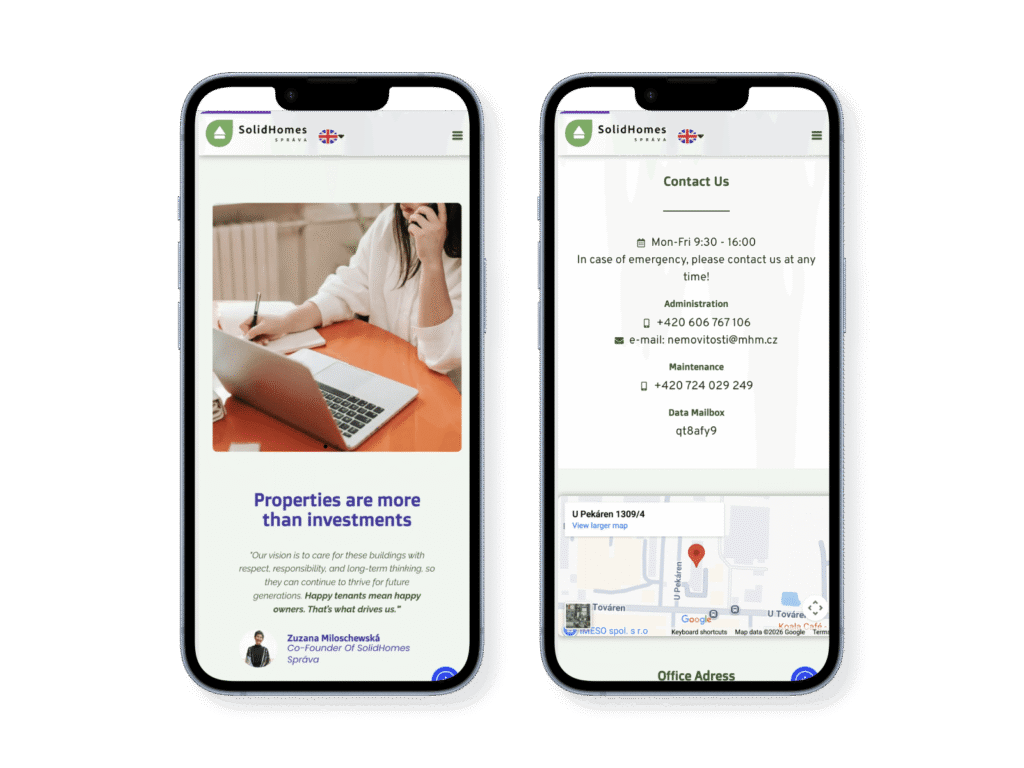
barboragustafsson.com

Case study: SolidHomes

Project type: Freelance client project

Year: 2026

Duration: 10 weeks

Tools: Figma, Illustrator, WordPress

My Role:
Product Designer responsible for end-to-end design and implementation, including:

• Market and competitor research

• User interviews and persona creation

• User journey mapping and information architecture

• Ideation and interaction design

• High-fidelity prototyping

• Brand identity design

• Website implementation in WordPress

mobile design website UX UI

Project Background

SolidHomes is a property management business operating in Prague, working with property owners and tenants to ensure safe, comfortable, and well-maintained housing. At the start of the project, stakeholders knew they needed improvement but were very unsure around brand positioning and target audience.

The Problem

SolidHomes was aiming to expand its market presence, but had no website and no brand identity. That meant that they couldn’t  communicate authority, or trust to their potential clients. The lack online platform made it difficult for potential clients to find them, understand their services, pricing, and how to get in touch.

Goals

• Present services and pricing clearly

• Build trust with potential clients

• Support older users with readable design and simple navigation

Result

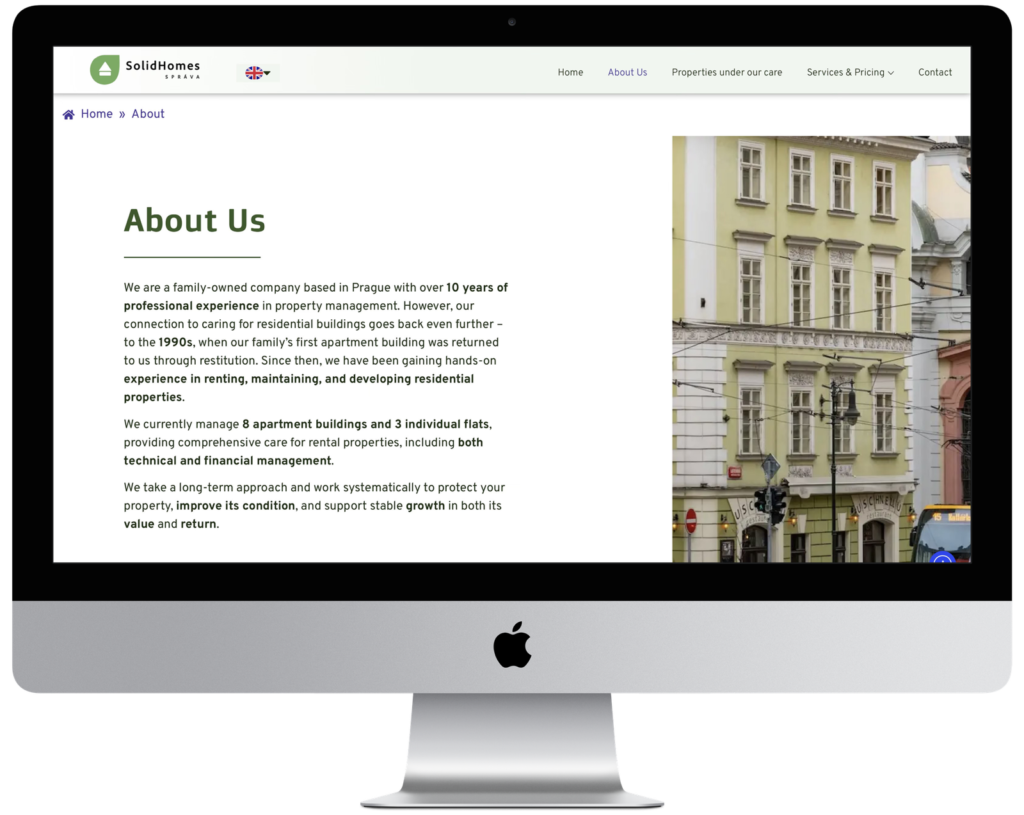
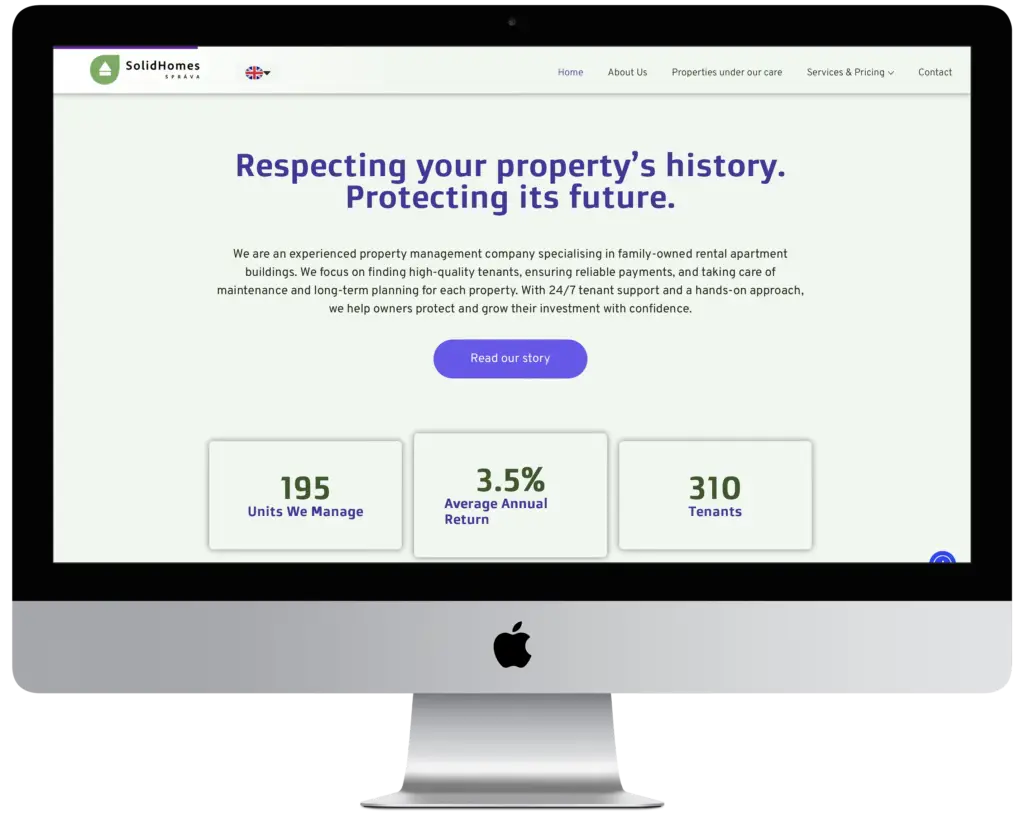
The project resulted in a cohesive brand identity system and a bilingual, SEO-optimised website that communicates trust, authority, and professionalism while remaining accessible to users with limited technical knowledge.

Research: Identify target Audience

Early discussions revealed an undefined audience. Through secondary research and interviews with property owners, a clear target group was identified: older users, families owning residential buildings, and users with limited technical confidence. This insight guided all design decisions

Identified Target Audience

• Older users
• Families owning residential buildings
• Users with limited technical confidence

Stakeholder quote: “Anybody - I would be happy to sell my services to frogs for all I care.”
- At the start of the project, the client described their audience very broadly

Understanding the user: Persona

Jan Novák (58), Prague-based teacher and a rental property owner. Jan values clear communication and direct contact options. He prefers trustworthy, professional design over modern or sales-driven interfaces.

persona for case study, an older man

Research - Competition analysis

Market analysis showed two extremes: highly sales-driven modern websites and outdated, text-heavy informational sites. SolidHomes was positioned deliberately between these extremes, focusing on friendly, educational content supported by modern but restrained UI design.

Brand Identity development

Logo exploration

After conducting market research and analyzing competitors, I led stakeholder interviews to align on business vision, target customers, and brand values.

A key challenge emerged: the stakeholders were uncertain about their desired brand positioning in a polarized market (ultra-modern vs. traditional).

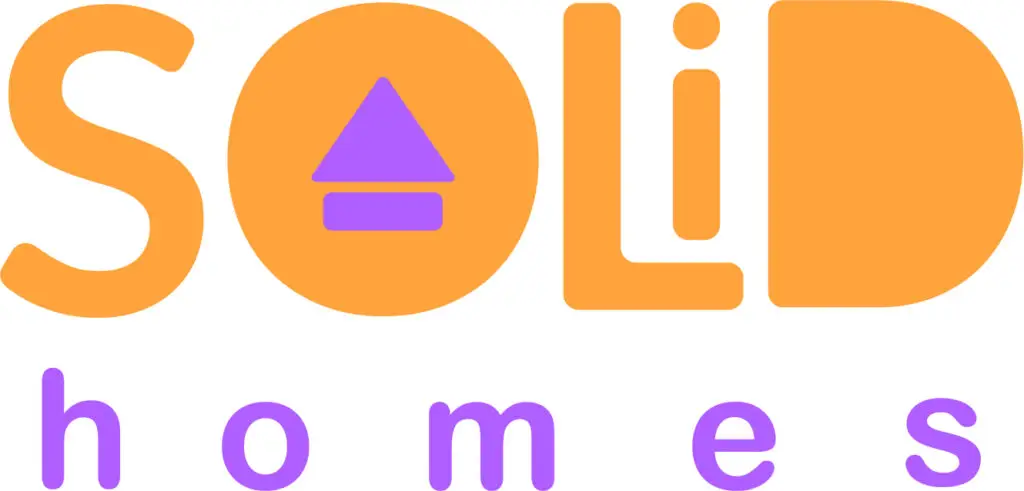
Rather than pushing a single direction, I created three distinct logo concepts, each evoking different emotions and market positions. This visual exercise helped stakeholders articulate preferences they couldn’t express in interviews alone.

Classical blank on white logo option 1

Concept 1:

Sleek black typography on white background. High-end and refined, but lacked personality and warmth. Risked appearing cold and unapproachable for older clients seeking personal service.

Concept 2:

Playful custom font with bright colors. Energetic and memorable, but felt too casual for the serious nature of property management and our older target demographic.

Concept 3: 
(selected)

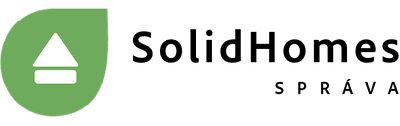
Clean sans-serif with distinctive green accent. Balances corporate credibility with approachability. The green differentiates from competitor blues while suggesting growth and stability.

The Decision

Through this visual exercise, stakeholders realized they needed warmth and personality (missing in Concept 1) without sacrificing professionalism (lost in Concept 2). The green differentiated them in a blue-dominated market while maintaining the trust older clients seek.

This led to creating a cohesive design system for the whole brand and its website:

Main logo
Icon, favicon
Stacked version

Color palette

The color system was designed to balance brand consistency with functional accessibility needs.

The brand green (#70AA5C) anchors the identity, but required expansion for accessible web implementation.

Greens (Brand & Structure): #70AA5C (logo), #38582B (text), #202F16 (body copy), #F0F6F0 (backgrounds)

Functional Accents:
#443998 / #6B5CEA (purple buttons – creates clear visual hierarchy) #FFDF2F (yellow links on dark backgrounds – ensures visibility) #FFFFFF (white for contrast) 

Why Purple & Yellow?
Purple provides strong contrast against green for CTAs, making interactive elements immediately identifiable. Yellow ensures link visibility on dark backgrounds while maintaining accessibility standards. Both expand the palette functionally while respecting the green brand foundation.

Style guide for a brand
websites buttons on dark background

Typography

Heading Font: Doppio One
Display (H1): 42px,
Subheadings (H2): 36px
Accent: 22px

Body Font: Overpass
Body text: 20px minimum (larger than standard 16px)
Line height: 1.2 em for generous spacing and scannability
Footer text: 16px

Clean sans-serif with open letterforms for clarity at all sizes

Doppio One adds distinctive character to headings while maintaining professionalism, while Overpass ensures exceptional readability in body text—critical for older users who may have declining vision. Together, they reinforce the brand’s modern-yet-approachable positioning.

Case study UX, type faces

Wireframing & Informational Architecture

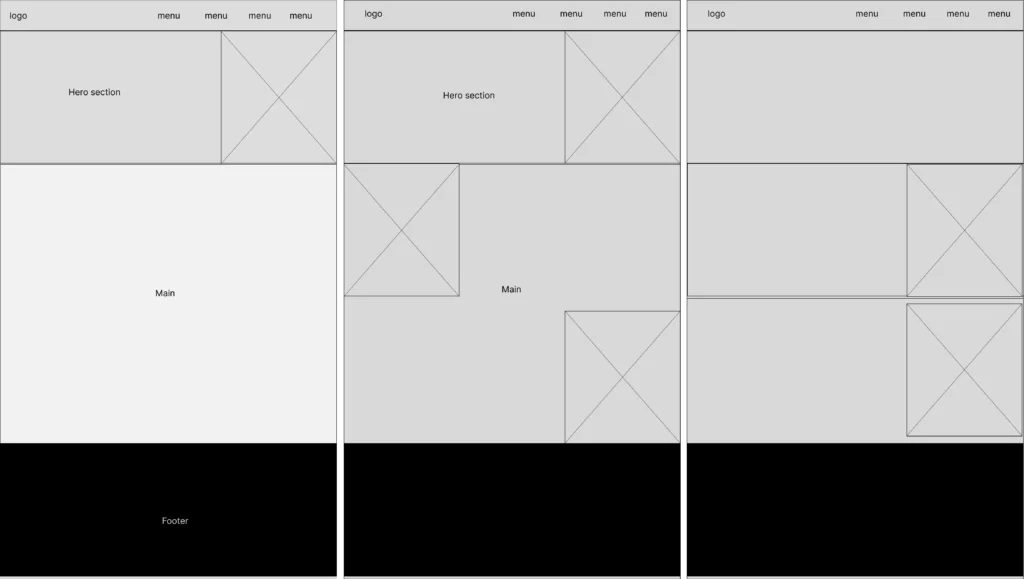
Early wireframes were used to explore layout, hierarchy, and navigation structure before visual design was introduced. The focus during wireframing was on:

  • creating a predictable and shallow navigation structure

  • supporting older users who may not scroll extensively

  • prioritising clarity of services and pricing

  • ensuring contact options were visible and easy to access

Wireframes helped validate structure and content placement early, reducing rework during high-fidelity design.

case study wireframes
Clear SEO and user friendly headlines, breadcrumbs for easier navigation
A city map showing managed properties - visual representation instead of only description

Outcome

Outcome

The website launched in January 2026. While business impact metrics are still developing (we’re currently in the SEO building phase with low initial traffic), the project successfully:

  • Established SolidHomes’ first professional online presence
  • Created clear pathways for potential clients to understand services and make contact
  • Built a scalable foundation for future marketing efforts


Success metrics

We’ve defined success metrics we’ll track over the next 3-6 months:  

  • Increase in organic search visibility for key terms like “property management Prague”
  • Client inquiries through e-mail and phone
  • Reduction in time spent explaining services (now available online)

Reflection and learnings

One of the most valuable parts of this project was working closely with stakeholders throughout the process. I particularly enjoyed discussing design decisions, explaining why certain ideas might not work as intended, and translating abstract preferences into concrete, user-focused solutions.

This project reinforced the importance of advocating for the user while balancing business goals.

Overall, this project highlighted that good design is not only about visual execution, but also about communication, reasoning, and guiding stakeholders toward decisions that serve both users and the business.